
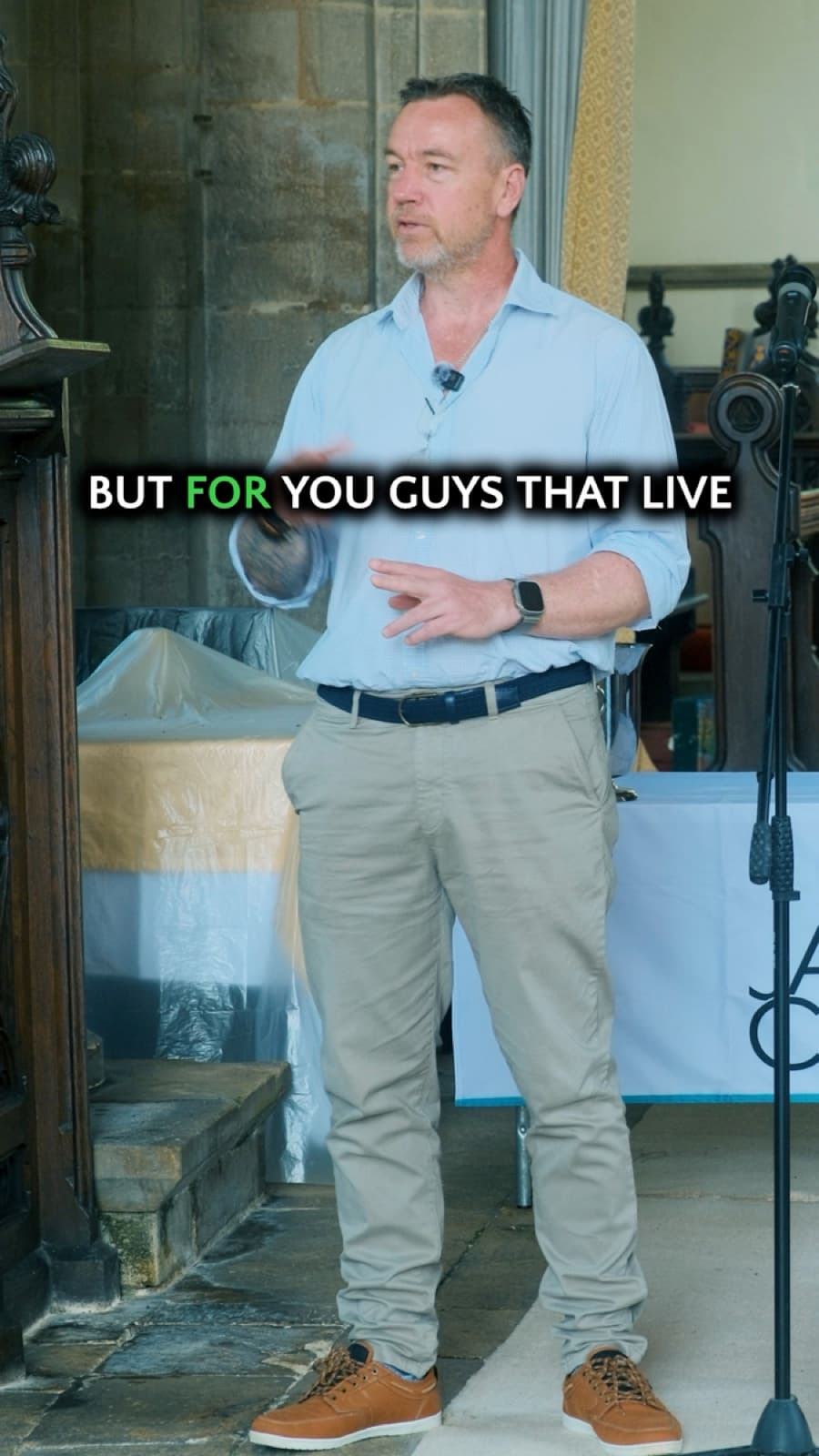
Stop trying to sound like a business
The moment a camera appears, perfectly interesting people can start speaking like a brochure. The sentences get longer. Words they never normally use creep in. Suddenly a straightforward explanation sounds like a pitch.
I would rather hear how you would explain something to a customer over a coffee. You already know your work. The task is to make that knowledge easy to follow, not to sound more impressive than you do in real life.
Answer one question at a time
Choose a question you answer regularly. What happens at the first appointment? Why does this part of the job take time? What should someone prepare before you arrive? Ask a colleague to read it out and answer them, rather than imagining a large audience.
Use three prompts: the answer, an example and what the viewer should do with that information. Keep the prompts beside the camera. They are a safety net, not a script to recite word for word.
If you lose your place, pause and start that sentence again. You do not need to apologise or restart the entire video. Leave a short gap so the edit has room to breathe.
Give yourself something familiar to do
Some people feel better sitting down. Others explain things more easily while showing a product or walking through a finished job. Choose a setup that suits the person and still lets us record clear sound.
Supporting footage can carry part of the explanation. Your hands, tools, workspace and process can show what you mean while your voice continues. You do not need to appear in every second of the finished film.
Keep the personality that is already there
I have written about this with Jack Cartwright: the visual style should suit the person. His dry humour and crime-writing world would feel odd inside a bright, corporate-looking video. The same principle applies to a relaxed café or a calm treatment room.
That does not mean forcing jokes or keeping every mistake. It means leaving in the turns of phrase and small details that sound like you. A clean edit can still feel human.
Try a low-pressure first recording
Record a practice answer that nobody has to publish. Watch it once for sound and clarity. Pick one thing to improve, then record again. Checking every facial expression is unlikely to make the next take feel easier.
Start with one useful finished video. You can build confidence from there. The free prompt sheet below includes questions, a simple answer structure and a review checklist, so you are not staring at a blank page before you start.
Further reading: My LinkedIn post about filming with Jack Cartwright.